
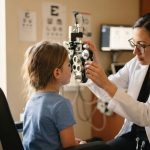




• Squinting, head tilting, sitting too close to screens, and frequent headaches are common signs a child needs a vision check.
• National guidelines call for eye screening starting in infancy and continuing through school age, with earlier referral if red flags appear.
• Kentucky families have access to local optometry practices offering comprehensive pediatric eye exams across the state.
Parents often wonder how to tell the difference between normal childhood clumsiness and an actual vision problem. If a child squints at the television, avoids reading, or complains of headaches after school, those behaviors are worth discussing with a Pediatric Eye Doctor Kentucky families trust for evaluation.
Vision problems in young children are frequently missed because kids assume blurry or doubled vision is normal. Many practices, including VisionFirst, list pediatric eye care among their core services, reflecting how common these evaluations are within general optometry.
Behavioral Signs That Point to a Vision Problem
Children rarely announce that they cannot see well. Instead, parents and teachers notice patterns in behavior that hint at an underlying issue.
Common red flags include:
• Sitting unusually close to the television or holding books near the face
• Frequent eye rubbing, blinking, or squinting during schoolwork
• Tilting the head or covering one eye to focus
• Losing their place while reading or using a finger to track lines
• Complaints of headaches, eye strain, or fatigue after close-up tasks
According to a child vision screening resource from Children’s Hospital of Michigan, the American Academy of Pediatrics and American Academy of Ophthalmology recommend that all children have an eye exam during the newborn period and again at every routine well-child visit. The same source notes that the U.S. Preventive Services Task Force recommends targeted screening for amblyopia, strabismus, and visual acuity problems between ages 3 and 5.
When Screening Isn’t Enough
School and pediatrician screenings catch many issues, but they are not a substitute for a comprehensive eye exam performed by a trained eye care professional. Screening identifies possible problems; a full exam confirms and treats them.
Situations that typically call for a dedicated eye exam rather than a basic screening include:
1. A child fails a school or pediatrician vision screening
2. There is a family history of strabismus, amblyopia, or other genetic eye conditions
3. A child has a known developmental delay or chronic health condition affecting vision
4. Parents notice one eye consistently drifting or turning inward or outward
Guidance compiled by Prevent Blindness explains that children who do not pass a vision screening should be referred to an eye care professional for a confirmatory, comprehensive eye examination.
Age-Based Guidelines for Kentucky Families
Understanding when routine checkups should happen helps parents stay ahead of problems rather than reacting to them.
|
Age Range |
Recommended Action |
Why It Matters |
|
Newborn to 6 months |
Vision check during well-child visits |
Detects structural or congenital issues early |
|
3 to 5 years |
Annual screening; comprehensive exam if flagged |
Peak window for amblyopia treatment |
|
6 to 18 years |
Screening every 1-2 years |
Catches refractive errors affecting schoolwork |
This table reflects general screening intervals described in pediatric eye health guidance rather than a fixed schedule for every child, since individual risk factors can change the timeline.
What a Pediatric Eye Exam Typically Involves
A comprehensive pediatric eye exam goes beyond reading letters off a chart. Optometrists trained in pediatric care evaluate how well a child’s eyes work together, track movement, and focus at different distances.
Practices offering this service, such as VisionFirst, describe pediatric exams as part of a broader commitment to family eye care alongside routine exams, contact lens fittings, and treatment for conditions like dry eye and glaucoma. Early detection during these visits supports not just clear eyesight but also reading readiness and classroom performance, since undiagnosed vision issues can be mistaken for attention or learning difficulties.
Frequently Asked Questions
At what age should my child have their first eye exam? Guidance from pediatric and ophthalmology organizations recommends checking a child’s eyes shortly after birth and again during infancy, preschool, and school-age well visits, rather than waiting for a single starting point.
Can screen time actually damage my child’s eyes? Extended close-up screen use is associated with increased eye strain and squinting in children, which is why behavioral changes tied to screen habits are worth mentioning at an eye exam.
What is the difference between a school screening and a comprehensive exam? A screening is a quick pass-or-fail check, while a comprehensive exam involves a trained eye care provider assessing eye alignment, focusing ability, and overall eye health in detail.
Should I worry if my child passed a school screening but still squints at home? Yes. Screenings do not catch every issue, so persistent symptoms at home still warrant a full evaluation even after a passing result.
Recognizing early signs of a vision problem gives Kentucky families the chance to address issues before they affect learning or daily activities. Local optometry practices across the state, including VisionFirst, list pediatric eye exams among their standard offerings, making it straightforward for parents to schedule an evaluation when something seems off. Acting on subtle behavioral cues now can make a meaningful difference in a child’s long-term visual development.

